
Standard Practice for Maintenance of Aircraft Electrical Wiring Systems
An industry as broad as the aerospace industry will have a variety of standards and recommended practices. The hope is that each standard brings something new through either a higher level of requirements or by providing better guidance to achieve a reliable aircraft. The ASTM Standard F2799 was written with the intention of being, “used for the maintenance and preventative maintenance of Electrical Wiring Interconnection Systems (EWIS).” Here we review this standard and some of the contained recommendations for maintenance of an aircraft’s EWIS.
Scope
As with all things, starting with the bounds of the document. The definition of EWIS used in the standard follows the definition that is used by the FAA. For those unfamiliar with this, the FAA’s bounds on EWIS include all components that deliver power from power generation to the electrical load, but this does not include fiber optics (note: the US military does include fiber optics in their EWIS definition).
Separation Recommendations
The ASTM F2799 standard provides guidance on the positioning of wire harness standoffs alignment and clamping. However, one area of concern with the standard is section 5.1.1.4 that says if a wire harness cannot maintain sufficient separation from structure or equipment, then additional protection should be used. While it is important that the EWIS be protected, this is a short term view of wire system protection. Consider this: the goal of maintaining separation is to minimize the chances for abrasion and subsequent wire damage. By placing secondary protection on the wire harnesses, this is an admission that there is a chafe point. The common practice should go one step further and require periodic inspection of any installed chafe protection.
‘Spring’ Cleaning
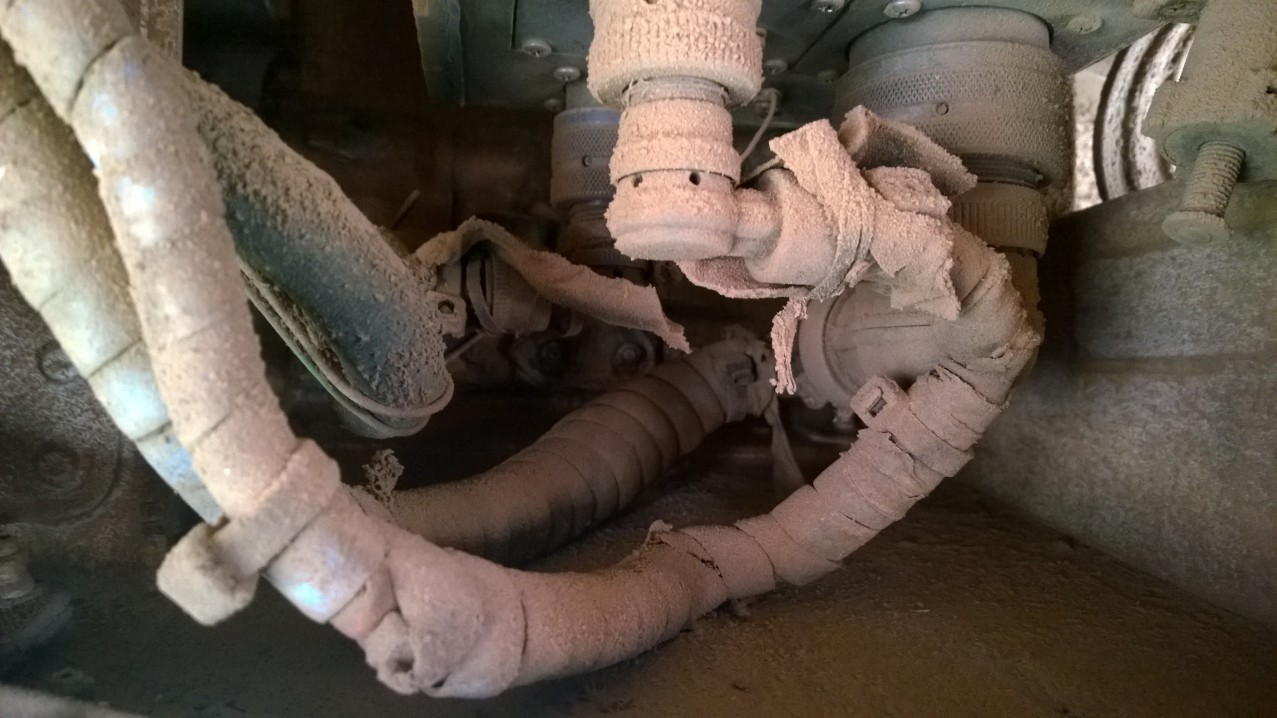
The F2799 is clear and up-front about the need to “Protect and Clean As You Go”. This concept regularly stresses the importance of protecting the EWIS during any maintenance operation. To go further, the standard recommends annual cleaning of the EWIS to remove dust, dirt, and corrosion. The obvious benefit of this is that, with fewer obstructions to the EWIS components, it is more likely that damage or degradation will be detected. While this is better than not performing any cleaning, these recommendations are in opposition with the FAA recommended Enhanced Zonal Analysis Process (EZAP) practice where the inspection and cleaning of the wire harnesses are analysis based. The reason for this analysis process is that there may be some areas of the EWIS that have a greater risk of failure and should be examined more frequently.
A practice recommended in the F2799 is the cycling of circuit breakers (manually pull the circuit breaker trip indicator and close again). Regular performance helps to clean the contact surfaces, breaks welded contacts and helps to identify any frozen circuit breakers (see this article on the potential impact of frozen circuit breakers). The F2799 standard recommends that this is part of an annual evaluation process.
Wire System Repair
The F2799 does provide several pages of guidance on the repair and upkeep of wires and cable. This includes splicing, terminal repairs, termination of shields, and multi-conductor cables. With multi-conductor cables, if an aircraft uses color codes to identify wire sizes, then it is recommended that any newly installed wire should match this. Failure to do so could result in errors in subsequent maintenance actions.
Some Areas in Need
After review of the standard, there is suggested reading to help fill in gaps:
- The standard does not provide recommended practice to be used for verifying electrical bonding.
- The ASTM F2799 is a good source for understanding the characteristic of batteries and the means to assess their performance and performance maintenance. Other areas such as Battery Freezing and Temperature Correction are also covered. For more information on the design and maintenance of batteries, I would recommend reading the FAA guidance included in AC 43.13 Chapter 10.
- The standard (as of the 2014 version) shows the AS22759 wires as having a 600V voltage rating. In 2014, this rating was removed.