
What does an aircraft wire testing lab look like?
It is quite possible many aerospace professionals have never seen the inside of an aircraft wire testing lab. If you haven’t had a chance to see our lab, here we present a quick tour.
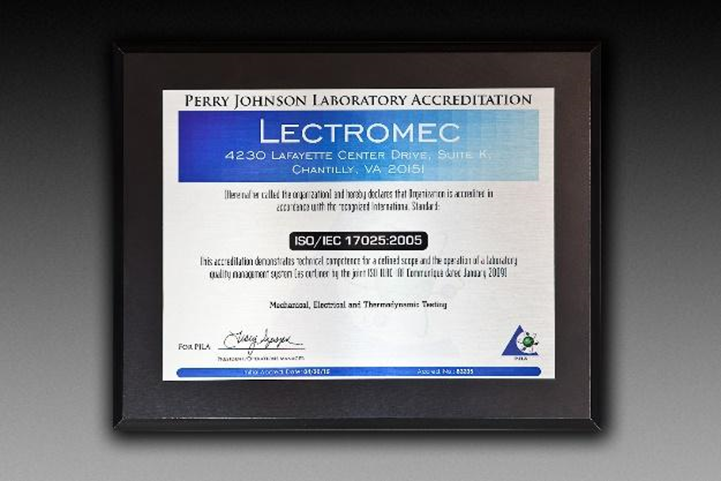
Aircraft wire testing starts with quality control and process management. Lectromec’s aircraft wire testing laboratory is an ISO/IEC 17025:2005 certified lab. It is the first aerospace wire and cable testing in the world to earn this certification. This commitment to quality has been the foundation of Lectromec’s thirty-year history. We have worked on projects from NASA, the Air Force, and many other organizations.
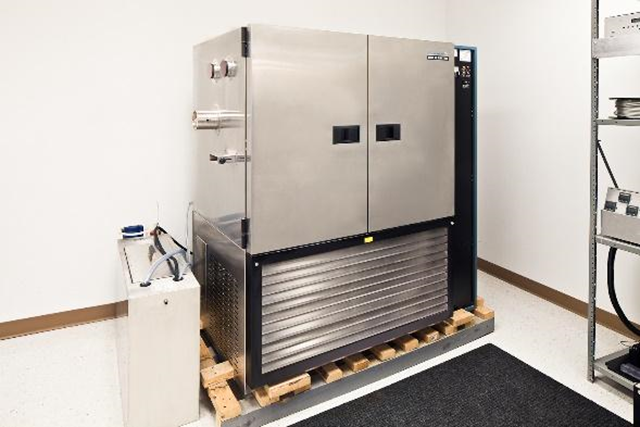
1. HUMIDITY CHAMBER
Not everyone realizes this, but aircraft wires are expected to last from 20 to 30 years! Since we can never know the exact storage and operation conditions that aircraft wires will be exposed to, in our lab, we create the most likely conditions that a wire will be exposed to, while accelerating the aging of the wire to mimic the passing of time over a 20 to 30 year period. The humidity chamber pictured here, has the capability to perform accelerated aging of components with an eight cubic foot capacity. The humidity levels range from ambient to 98% and the temperatures go as high as 150 degrees Celsius.
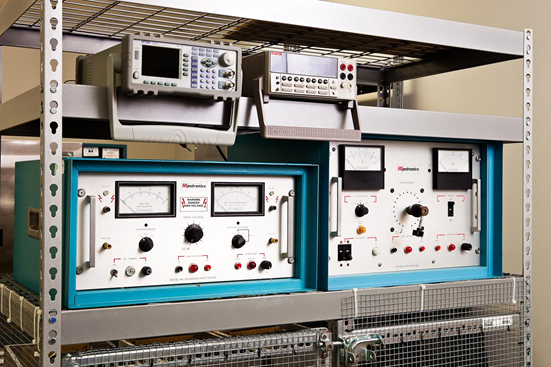
2. HIGH VOLTAGE
What happens to wires and connectors when higher voltages are used? Here are our AC and DC high voltage testers. The AC system has a voltage range of 0 to 15,000 VAC. The DC system has a voltage range from 0 to 5,000 VDC. High frequency, high voltage capabilities are not shown. This unit can test to most UL, CSA, VDE, IEC, and MIL for dielectric withstand standards.
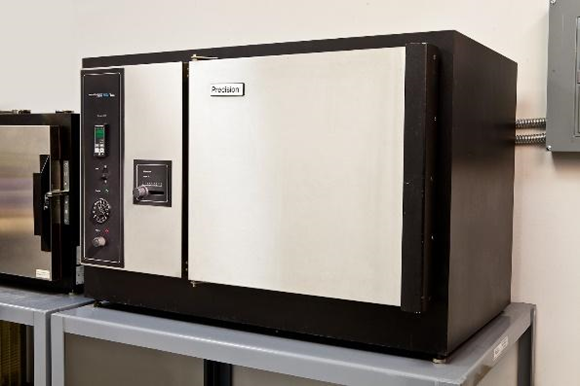
3. SCIENTIFIC OVEN
This is a mechanical convection oven with a capacity of 1.4 cubic feet. It has a range of +30° to 325° Celsius (the equivalent of 617 degrees Fahrenheit!). The scientific oven is used to certify performance for many kinds of aircraft wire insulation.
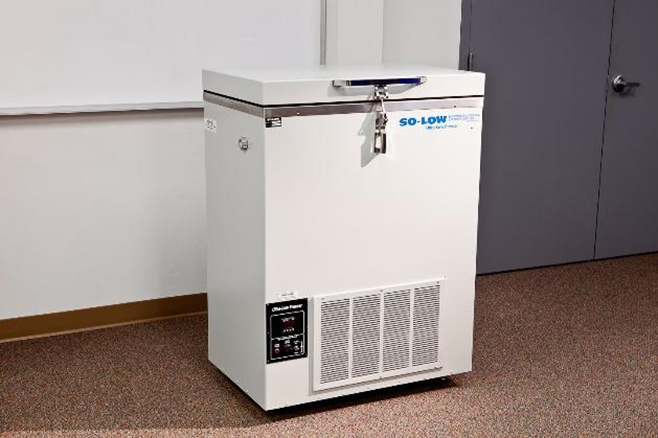
4. LOW TEMPERATURE FREEZER
Not only does aerospace wire have to withstand heat, but also cold. Here is our -85oC freezer. Aircraft wire must be able to withstand quick transitions of temperature, called thermal shock. Finally, these wires must still be able to sustain flexing at cold temperatures – called cold bend capability.
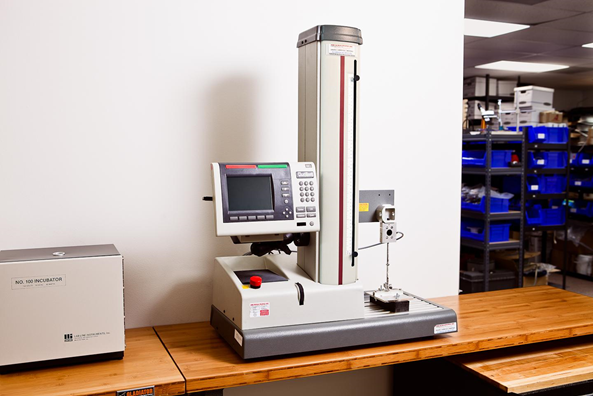
5. FORCE TESTER
This unit can apply up to 225 pounds of force. It is used for wire elongation testing, dynamic cut-through, and can be augmented to perform testing at elevated temperatures. This is a typical test for new components, and it frequently performs ten trials for each wire.
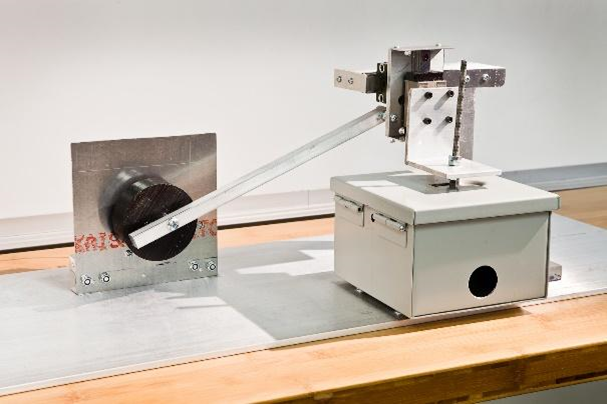
6. SCRAPE ABRASION
Wires can be subjected to abrasion from poor design, broken clamps, or inadvertent damage during routine maintenance. Over the years, Lectromec has manufactured a wide range of devices to determine scrape abrasion. This device examines the mechanical wear resistance for wire and cable. Some tests can be performed at elevated temperatures as high as 250oC.
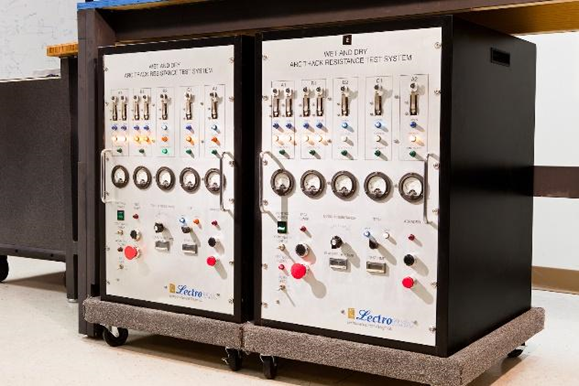
7. ARC TRACK RESISTANCE
Aerospace wires can get damaged and arcing can occur. In order to ensure that collateral damage is limited, arc track resistance testing is necessary. These are Lectromec’s wet and dry arc track resistance test systems. These units were custom manufactured by Lectromec to comply with the industry test standards.
Most modern aerospace wires require this test.
This equipment is used to show that wires are in compliance with specifications from SAE, MIL Spec, EN, and EASA.
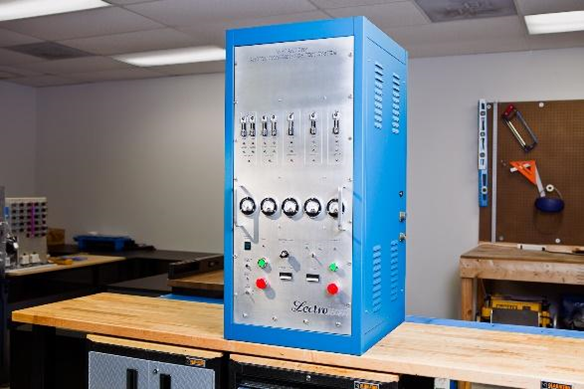
8. CUSTOM TEST EQUIPMENT
We’d love to perform your aerospace wire testing. However, we can also provide custom manufactured testing units for you to do your own testing. This is a picture of a wet/dry arc testing device. We have manufactured equipment for the U.S. Navy and other organizations, domestically and abroad.
CONCLUSION
Thanks for taking a “virtual” tour of our aircraft wire testing laboratory. If you are ever in the Washington, D.C. area we’d love to give you a personal tour of all the devices we use.
If you would like more information on other aerospace issues, please go to our blog.