
MIL-HDBK-525 EWIS overview: Task 4 — Component assessment
This is a series that will give you a good EWIS overview. This article is the fifth in the series devoted to reviewing the guidance provided in MIL-HDBK-525 for Electrical Wire Interconnection System (EWIS) Service Life Extension Programs (SLEPs). If you missed one, here are the links to be previous articles:
- MIL-HDBK-525 Overview
- MIL-HDBK-525 Overview - Task 1: EWIS Documentation
- MIL-HDBK-525 Overview - Task 2: Data Analysis
- MIL-HDBK-525 Overview – Task 3: EWIS Inspection
Task four of the MIL-HDBK-525 focuses on component assessment. Two main goals within this task are to:
- Determine the current condition of EWIS components, and
- Assess the remaining component service life
These goals are accomplished through general assessment methods, techniques, and focus sampling from the fleet.
There are a couple of generic assessment techniques that can be used to provide a basic understanding of the EWIS component integrity. Visual inspection is a common assessment method; however, performance degradation often is not visually detectable.
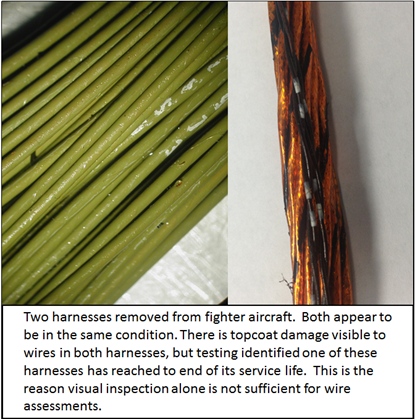
Other assessment types include: conductor/contact corrosion, contact resistance, wire insulation degradation, and conductor integrity. The assessment method used should be applicable to the EWIS component evaluated (e.g. determining the wire insulation remaining life would not require contact resistance measurements). Each assessment provides specific data necessary to perform the risk assessment (Task 5 to be described in the next article).
When performing component assessments, a representative sampling of components from a selection of aircraft within a fleet is ideal; the samples quantity and number of aircraft selected for assessment is dependent on fleet configuration variability and utilization. Availability, accessibility, and age are three important selection factors to consider when selecting aircraft and component samples.
EWIS components that are located in areas not often accessed and are costly to remove should be thoroughly inspection before removal. If possible, the oldest aircraft should be among the sampled aircraft.
Also note that any inspections performed during removal and any violations of best practices not identified in task #3 should be documented; if critical, remediating actions should be taken after review.
The output from this task should include the following:
- EWIS component degradation report
- Identification of trouble areas (areas near end of service life)
- Forecast on remaining system life
The next article in the series (Task 5) develops a EWIS risk assessment process utilizing the combined results of the previous four tasks. To find out more about how the component assessment can impact your aircraft service life, contact Lectromec.