
Implications of circuit breakers and wire size for wire systems
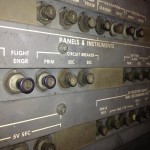
Circuit breakers are designed to activate (open the circuit) when the electrical current is in excess of the device rating. This is done to protect both the electrical device and the wiring. As such, it is important to select the correct circuit breaker to meet the electrical circuit needs as well as prevent overheating and damage to the wiring.
If you are interested in wire systems, you may want to read Lectromec's Results of Intrusive Inspection on Wire Systems article.
When selecting a circuit breaker for the protection in an aerospace platform, it is important to note that the recommendations are different than those for home or building use. This is because with home use, there is a very limited range of environments. Further, it is unlikely that there are going to be large numbers of wires bundled together which would impact the heat rise on a given conductor. These are all factors that affect the size of wire used.
These following values were taken from FAA document AC43.13-1B Table 11-3.
| Wire Gauge | Circuit Breaker Rating (A) | Fuse Rating (A) |
| 22 | 5 | 5 |
| 20 | 7.5 | 5 |
| 18 | 10 | 10 |
| 16 | 15 | 10 |
| 14 | 20 | 15 |
| 12 | 30 | 20 |
| 10 | 40 | 30 |
| 8 | 50 | 50 |
| 6 | 80 | 70 |
| 4 | 100 | 70 |
| 2 | 125 | 100 |
| 1 | 150 | |
| 0 | 150 |
One item to note here is that the values provided are intended for DC circuits. Further, the chart is seen as being conservative for all ordinary modern aircraft. The following are the conditions assumed for the chart:
- Wire bundles in 135 °F ambient and altitudes up to 30,000 feet.
- Wire bundles of 15 or more wires, with wires carrying no more than 20 percent of the total current carrying capacity of the bundle as given in Specification MIL-W-5088 (ASG).
- Protectors in 75 to 85 °F ambient.
- Copper wire Specification MIL-W-5088.
- Circuit breakers to Specification MIL-C-5809 or equivalent.
- Fuses to Specification MIL-F-15160 or equivalent.