
AIR7502 and Future Implications for Aviation
As the aerospace industry progresses to a more electric-driven future, the need arises for standards and regulations governing novel aircraft designs. Much of this process begins with identifying how the term “high voltage,” or HV, applies to aviation and aerospace in practice. In a previous article Lectromec discussed the idea that established automotive standards for HV may be a useful aid in determining requirements and applications of HV for aircraft. The next step is to categorize the voltage levels to support the system and component designers. This is where AIR7502 comes in.
What is AIR7502?
The SAE AE-7 committee is a group of individuals from the aerospace industry (OEMs, government affiliates, academia, etc.) charged with the development and upkeep of standards, specs, and requirements regarding aerospace electrical power and equipment. In 2021, the SAE AE-7 committee published AIR7502, a document detailing the committee’s agreed-upon definitions for aircraft electrical voltage levels.
The majority of the AIR7502 document simply identifies six voltage levels for the categorization of HV aircraft and associated components. Each voltage level includes a voltage range as well as anticipated surge voltages for both AC and DC systems. In the provided table, we have abridged the voltage level definitions of AIR7502 to give an idea of the range(s) covered by each level. The table shows only the maximum voltage for each level for normal operation (excluding transient voltage spikes).
| Voltage Level (VL) | Maximum AC Voltage (rms) | Maximum DC voltage (amplitude) |
| 1 |
42.4 VAC |
60 VDC |
| 2 |
213 VAC |
300 VDC |
| 3 |
425 VAC |
600 VDC |
| 4 |
851 VAC |
1000 VDC |
| 5 |
3600 VAC |
5100 VDC |
| 6 |
Above 3600 VAC |
Above 5100 VDC |
The AE-7 committee justifies the selected values for each voltage level as summarized below:
- VL1: The lowest voltage level. A range of voltage that is safe if/when a human is exposed to it.
- VL2: The upper limit of voltage level 2 is intended to represent the Paschen limit of air at standard conditions (sea level, room temperature).
- VL3: Voltage level 3 aligns with currently available HV components such as IGBTs and MOSFETs.
- VL4: Voltage level 4 is intended by the AE-7 committee to represent present levels of insulation materials.
- VL5&6: Voltage levels 5 and 6 are representative of future, even higher-powered aircraft designs and may address these categories moving forward.
At face value, the AIR7502 is an overpriced standard for the content; after all, there are only three pages. The document's implications, however, are what have the greatest impact.
Power Component Design
Naturally, with high-power HV systems, associated components must be capable of operating in such applications. When components are designed for HV aircraft, they will likely either be custom or designed with the maximum voltage of AIR7502 in mind. Custom components ensure functionality and compatibility with the system but require more design and labor time, reduce options for interchangeability, and are typically more expensive.
Components designed more generally to meet the maximum requirements of AIR7502 are expected to be more interchangeable but may be significantly overdesigned for lower-voltage applications within the vehicle or vehicles with lower voltage power systems. Arguably, this could provide for design headroom as energy storage technology improves, allowing for swapping the power supply without major changes to the supporting electrical components.
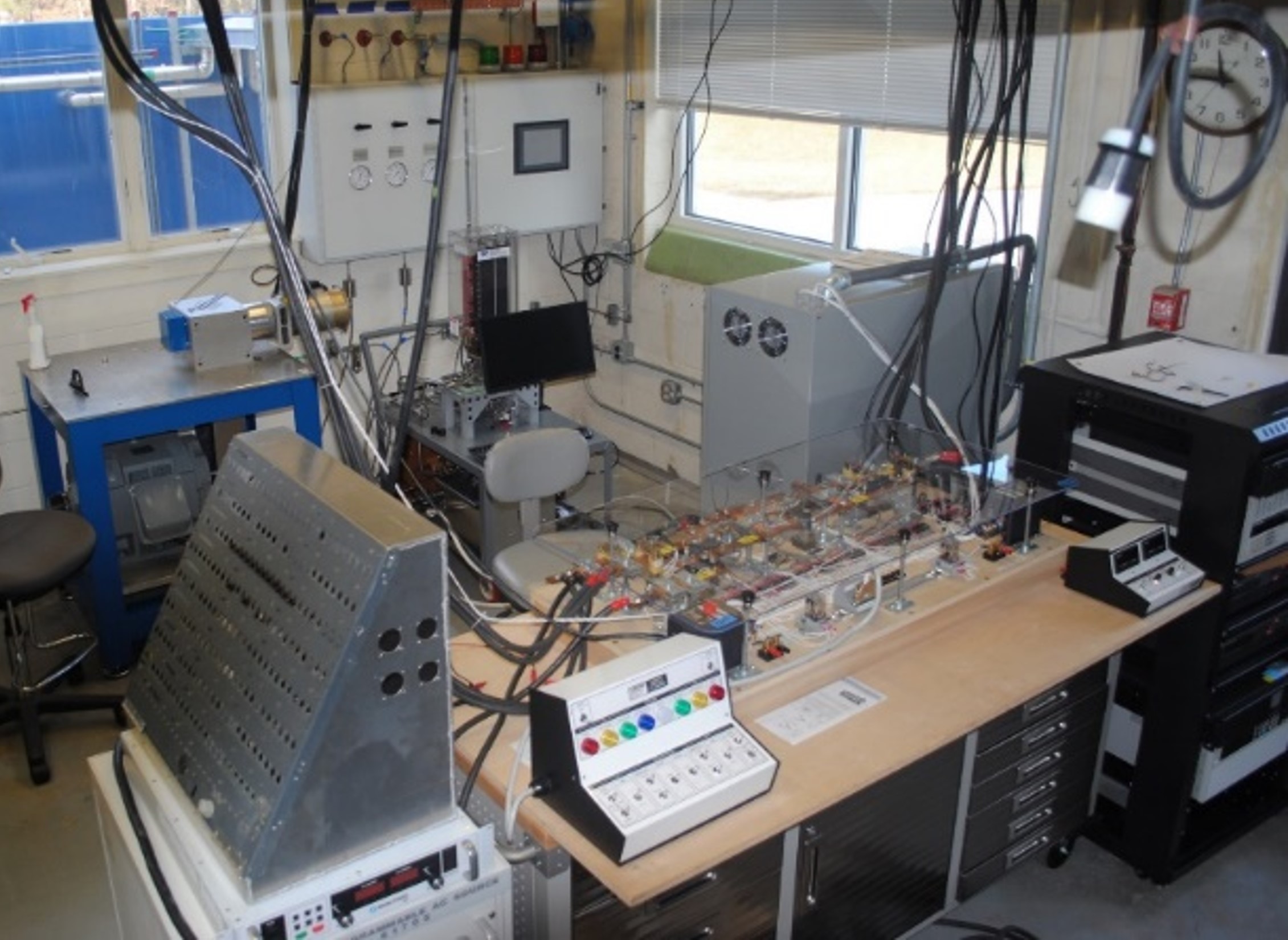
Using the voltage levels defined in AIR7502 may help to inform component designs – design components applicable to each voltage level.
From Details to Performance
For the longest time, most EWIS components have been identified via detailed specifications (every part and material were explicitly defined). With generalized voltages defined in AIR7502, the component standards may have to follow suit and become more generalized as well. This will make standard part comparison more difficult as it will be possible for parts made of significantly different materials and constructions to achieve the same objective.
Compatible Part Selection
A key part of HV aircraft design is defining the operational voltage range of the aircraft’s power system; this informs and limits the selection of parts to those that align with the aircraft voltage. Aircraft manufacturers may apply AIR7502 to select compatible parts by identifying which voltage level their aircraft falls into and selecting parts that have been approved for that same voltage level.
Challenges for Middle-of-the-Field Components
Existing high-voltage components whose range of operation falls between voltage levels may struggle to find a place within the new categorization. For example, if a component can perform at a maximum voltage of 2500VAC it far exceeds the range of voltage level 4 but is still unable to meet the performance requirements of voltage level 5. Those doing generalized searches for their VL5 application may miss out on components that can address their needs. This performance and rating gap may prove challenging when trying to find a market for such components.
Industry Incorporation of AIR7502
Keep in mind that this is an AIR (Aerospace Information Report) and does not provide requirements or recommended practices. How the community absorbs this AIR is uncertain. The work being performed in the AE-10 (High Voltage) and AE-11 (Aging Models for Electrical Insulation in High Energy Systems) communities is leveraging these voltage subdivisions; the work in these committees is ongoing and the final use of the AIR remains undetermined.
Conclusion
The AIR7502 is an important step in the development of aerospace standards for high-voltage applications. It is a much simpler task to address the needs of each level separately rather than trying to cover “high-voltage” as a whole. Having clearly defined voltage levels gives the rest of the industry a common starting point when considering future regulations, safety standards, etc.